
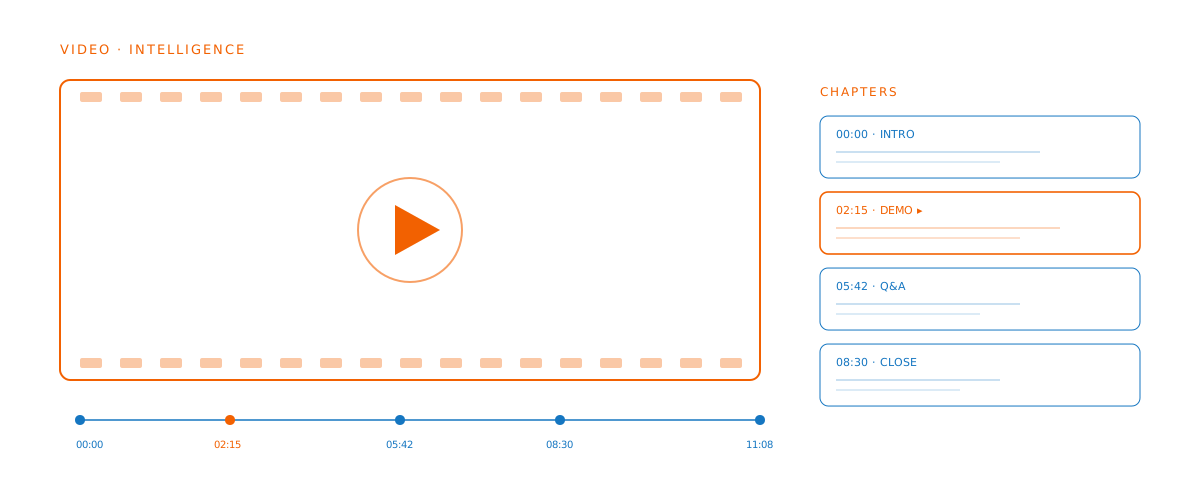
Video is the richest media format the internet has ever carried — and the least searchable. A two-hour podcast, a customer interview, a product demo: every one of them contains dozens of specific moments a team would want to cite, clip, or act on. Yet the default retrieval experience for video remains a scrubbing bar and a prayer.
The pipeline
vTAG.ai ingests video through a four-stage pipeline:
- Transcription — frame-accurate word-level timestamps via a mixture of Whisper-large-v3 and in-house diarization.
- Semantic chunking — we don’t cut on silence; we cut on topic shift using an embedding-delta heuristic over sliding windows.
- Multi-modal tagging — each chunk receives a structured tag set (speakers, entities, topic, sentiment, visible artifacts) from a vision-language model.
- Index + embed — chunks go to AstraDB for vector search and Supabase for relational joins.
Why we didn’t use an off-the-shelf tool
Existing video platforms optimize for playback, not retrieval. They give you a transcript and call it a day. The moment a user wants to ask “show me every time a customer mentioned pricing friction” across their library, the data model collapses.
We built the chunk schema to be queryable by both text and structured facets — which means a marketing team can ask a natural-language question and get back timestamped clips from fifty different recordings, ranked by semantic relevance.
What’s next
We’re adding visual-anchor search (find this logo, find this face, find this product shot) and multi-language transcription with cross-language retrieval. The goal is simple: every video in your library becomes as searchable as a Notion database.
Try vTAG.ai → vtag.ai