
The dashboard is a 1990s artifact. It assumes someone is looking at it. It assumes they know which question to ask. It assumes the right signal always fits on a tile.
None of those are true in a modern enterprise. The data volume has outgrown the attention budget. FusionScope.ai was built on a different premise: let the system read the dashboard for you, and only speak up when it matters.
The agent topology
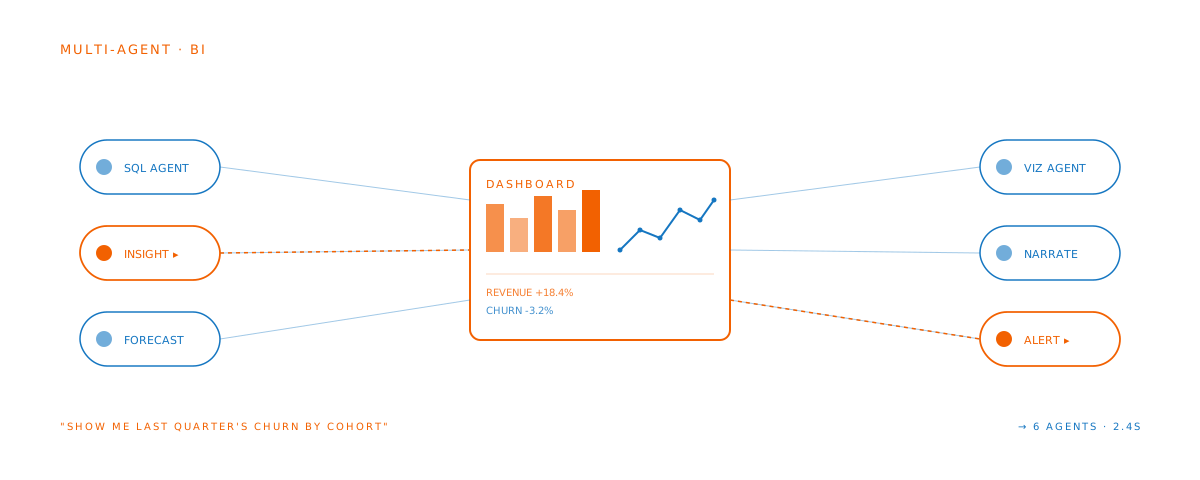
FusionScope deploys a graph of specialized agents against your data sources:
- Connector agents — CRMs, warehouses, event streams, product databases.
- Pattern agents — trend, anomaly, cohort, churn, funnel.
- Correlation agents — cross-source hypothesis testing.
- Narration agents — compose the insight into a one-paragraph brief.
- Routing agents — decide who needs to know, where, and how urgently.
Under the hood this is LangGraph with typed state transitions and a shared episodic memory. Agents don’t just run — they remember what they’ve already told you and what you’ve already dismissed, so the same noise doesn’t page you twice.
Why “ask the dashboard” isn’t enough
Natural-language-to-SQL is a party trick. The real work in BI is not translating a question — it’s knowing which question to ask. That’s why we lean on an agent loop instead of a single prompt: agents can form hypotheses, check them against the data, discard the ones that don’t hold up, and only surface what survives.
The hard part
Getting this right means getting the silence right. A BI tool that pages you ten times a day quickly becomes a BI tool you mute. FusionScope’s default posture is quiet — it speaks up when the signal clears a dynamic threshold that adapts to your dismiss-rate.
Watch your stack speak for itself → fusionscope.ai