
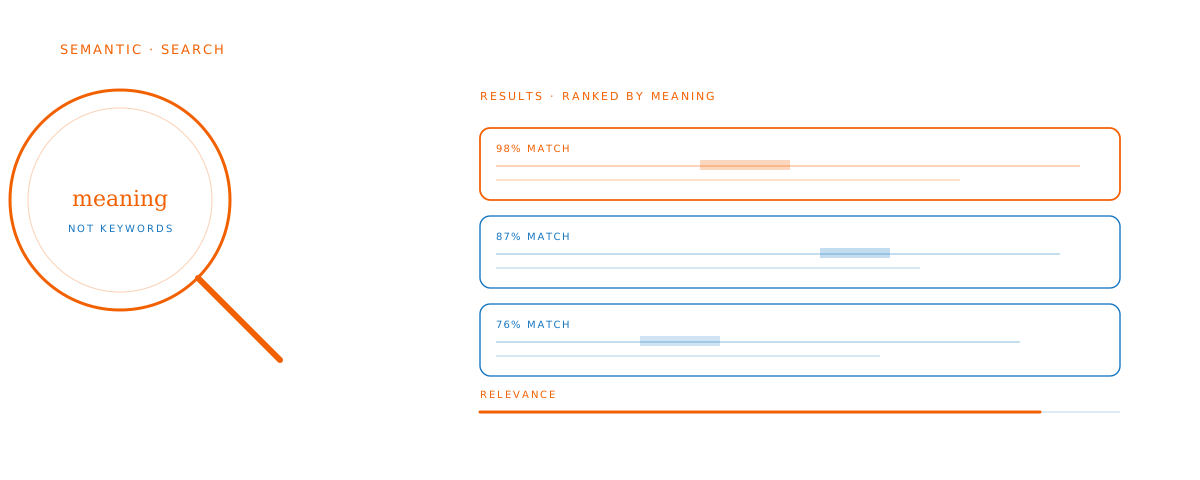
Most site search widgets today are a thin UI over an inverted index and some fuzzy matching. They were state of the art in 2012. In 2026, users type full natural-language questions, expect answers, and compare your site to whatever Claude or ChatGPT just told them.
The bar moved. Most site search didn’t.
What “semantic” actually buys you
When we say FaiSearch is semantic, we mean three concrete things:
-
Embedding-based retrieval — a user types “how do I cancel without losing my data” and the widget surfaces the page about data export, even if the word “cancel” never appears in it.
-
Intent classification — a question about pricing routes differently from a question about setup. The widget knows which.
-
Generated answer summaries — the top results are accompanied by an AI-written paragraph that directly answers the question, with source links back to the original pages.
Drop-in means drop-in
We do not want to be a six-month integration. The FaiSearch widget ships as a single <script> tag. You paste it into your site, point it at your sitemap, and it indexes itself. Re-indexing is incremental and automatic on content changes.
What we learned
The hardest problem in site search is not retrieval — it’s restraint. An AI answer that confidently makes up a feature is worse than no answer at all. FaiSearch refuses to answer when retrieval scores are below a confidence threshold; it quietly falls back to showing links. That restraint is the feature.
Make your site actually searchable → faisearch.com